A new Defense Special Corporate Tax has been introduced in Japan pursuant to tax reform legislation enacted on March 31, 2025. As a consequence of this legislative change, Japan’s statutory effective tax rate will be revised.
1. Overview of Defense Special Corporate Tax
For each fiscal year beginning on or after April 1, 2026, corporations subject to corporate income tax on their income are required to file and pay Defense Special Corporate Tax. The tax is calculated by applying a 4% surtax to the corporation’s tax amount after making certain adjustments as described below. The tax return for Defense Special Corporate Tax is filed using the same form as the corporate income tax return; however, additional input fields will be added to the existing format.
2. Details of the revision
(1) Taxpayers
The taxpayers subject to Defense Special Corporate Tax are corporations that are subject to corporate income tax on their income for each fiscal year. Foreign corporations that do not have Japan-source income are not required to file a tax return for the Defense Special Corporate Tax.
(2) Base Corporate Tax Amount
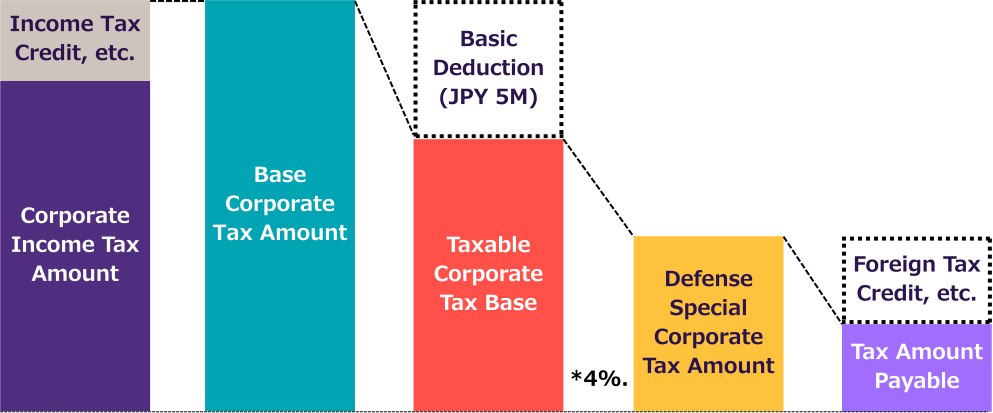
The Base Corporate Tax Amount represents the corporate income tax amount calculated on taxable income for each fiscal year, excluding ancillary taxes, in accordance with the Corporate Tax Act and other relevant laws and regulations.
Note: In calculating the corporate income tax amount for purposes of this definition, certain tax credit provisions are not taken into account, including the income tax credit and the foreign tax credit, among others.
(3) Tax Base
The tax base of Defense Special Corporate Tax is defined as the Taxable Corporate Tax Base for each taxable fiscal year. This amount is calculated as the Base Corporate Tax Amount for each taxable fiscal year minus the basic deduction of JPY5 million per year.
Note: This description assumes that the special tax rate applicable to specified family corporations is not imposed.
(4) Calculation of the Tax Amount
The amount of Defense Special Corporate Tax for each taxable fiscal year is calculated by applying a 4% tax rate to the Taxable Corporate Tax Base for that fiscal year. In addition, where a corporation is eligible to claim a foreign tax credit for corporate income tax and local corporate tax, and any portion of such foreign tax credit cannot be fully utilized against the amounts of corporate income tax and local corporate tax, the unutilized portion may also be applied against Defense Special Corporate Tax.
(5) Final Tax Return
In principle, the final tax return for Defense Special Corporate Tax must be filed within two months from the day following the end of each taxable fiscal year. Notably, a final tax return is required even where the Base Corporate Tax Amount is zero due to a tax loss or other reasons, or where the Taxable Corporate Tax Base becomes zero as a result of the application of the basic deduction.
Note: Where the filing deadline for the corporate income tax final return has been extended, the filing deadline for the Defense Special Corporate Tax final return shall likewise be the extended filing deadline
(6) Interim Tax Return
For taxable fiscal years beginning on or after April 1, 2027, corporations that are required to file an interim corporate income tax return are also required to file an interim return for Defense Special Corporate Tax.
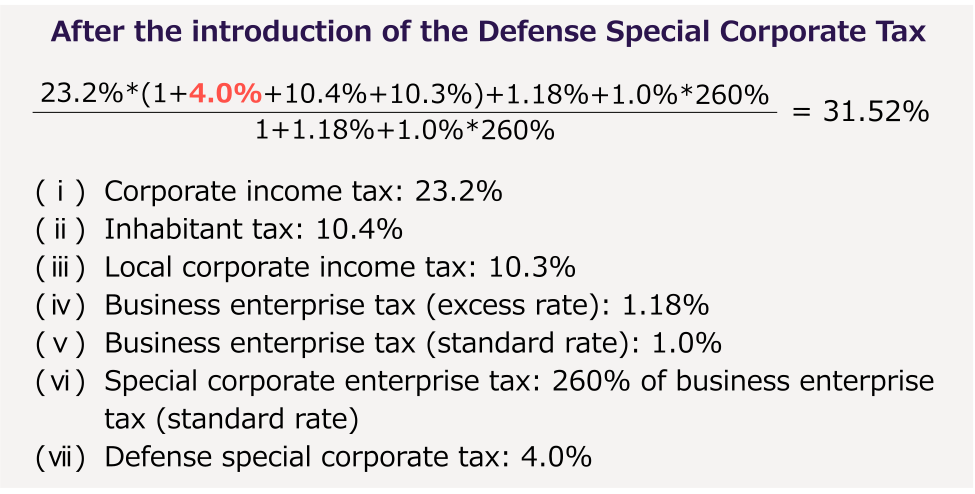
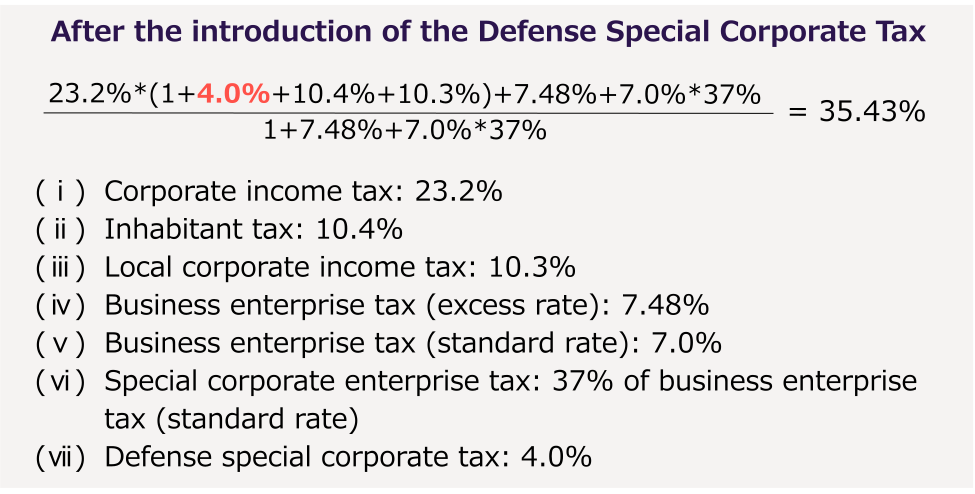
3. Impact on the Statutory Effective Tax Rate
The introduction of the Defense Special Corporate Tax affects deferred tax accounting practices, particularly the calculation of the statutory effective tax rate used in measuring deferred tax assets and deferred tax liabilities.
(1) For corporations located in Tokyo and subject to the size-based taxation regime
![ Before the introduction of the Defense Special Corporate Tax]()
![ After the introduction of the Defense Special Corporate Tax]()
(2) For corporations located in Tokyo and not subject to the size-based taxation regime
![ Before the introduction of the Defense Special Corporate Tax]()
![ After the introduction of the Defense Special Corporate Tax]()
Annex
Overview diagram of the Defense Special Corporate Tax calculation.
![Overview diagram of the Defense Special Corporate Tax calculation.]()
Source:
National Tax Agency, “Defense Special Corporation Tax has been established.” issued May 2025.,